Electronic Resource
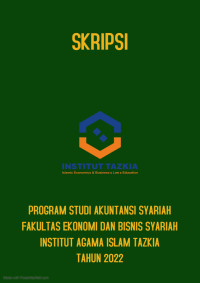
Non-Fungible Tokens As A Fraud Patwhay : Analysis Form Forensic Accounting And Sharia Perspectives
Purpose: This study analyzes the possibility of fraud in Non-Fungible Tokens
(NFT) transactions using forensic accounting and Sharia perspectives.
Method: This study uses a qualitative research method through an experimental
method approach. The data collection method was conducted through interviews
with NFTs Creator, Auditor, and DSN-MUI Ulama and secondary data from
reading journals, scientific books, theses, and websites.
Result: This study concludes that NFT has the potential as a means of fraud such
as Pump-and-Dump, Rug Pull, and Money Laundering schemes according to the
nature of NFT itself. However, all of these fraud schemes can be prevented by the
users (investors). They must know what they are buying, either by educating
themselves on fundamental analysis or using forensic accounting techniques.
However, in terms of sharia, NFT transactions are haram because they contain
gharar (obscurity), dharar (danger), maysir (speculation) and have been given a
haram fatwa by the MUI
Availability
Detail Information
- Series Title
-
-
- Call Number
-
REF 657.3 CHO n
- Publisher
- Bogor : IAI Tazkia., 2022
- Collation
-
AS
- Language
-
English
- ISBN/ISSN
-
NIM.18102068
- Classification
-
657.3
- Content Type
-
-
- Media Type
-
-
- Carrier Type
-
-
- Edition
-
-
- Subject(s)
-
-
- Specific Detail Info
-
-
- Statement of Responsibility
-
Nurul Choeroh
Other version/related
No other version available
File Attachment
Comments
You must be logged in to post a comment
 Computer Science, Information & General Works
  Philosophy & Psychology
  Religion
  Social Sciences
  Language
  Pure Science
  Applied Sciences
  Art & Recreation
  Literature
  History & Geography